Extra Virgin Olive Oil in Antiviral Activity
In addition to its anti-inflammatory and antioxidant components, extra virgin olive oil (EVOO) is known to contain compounds with antiviral properties, although their ability to work against the novel coronavirus has not yet been documented. For example, a patent claims that oleuropein, one of the main phenolic compounds in EVOO, has potent antiviral activities against several types of viruses. In a separate study, oleuropein also “showed significant antiviral activities” against respiratory syncytial virus and para-influenza type 3 virus. Other research has also discussed the antiviral effect of another phenol in EVOO, hydroxytyrosol, on the influenza virus.
Βeneficial effects of Extra Virgin Olive Oil
Extra Virgin Olive oil may exert beneficial effects on the human health and especially on the immune system, because it contributes to the reduction of typical inflammatory activity observed in patients suffering from autoimmune disorders [1], but without exacerbating the susceptibility to pathogen agents. This might lead us to believe that extra virgin olive oil is the perfect anti-inflammatory food for the coronavirus era.
Extra virgin olive oil is a valuable component of a healthy diet and lifestyle that can help keep our immune system strong and reduce the inflammation and oxidative stress that lead to a variety of diseases.
Studies have shown that Extra virgin olive oil helps prevent diabetes and cardiovascular disease, as well as other diseases and conditions [2] that increase individuals’ risk for serious cases of COVID-19. While additional research is required before benefits against coronavirus infection can be ensured.
References
- Puertollano MA, Puertollano E, Alvarez de Cienfuegos G, de Pablo Martínez MA. Aceite de oliva, sistema inmune e infección Olive oil, immune system and infection]. Nutr Hosp. 2010 Jan-Feb;25(1):1-8. Spanish.
- Zabetakis, I.; Lordan, R.; Norton, C.; Tsoupras, A. COVID-19: The Inflammation Link and the Role of Nutrition in Potential Mitigation. Nutrients 2020, 12, 1466. https://doi.org/10.3390/nu12051466.
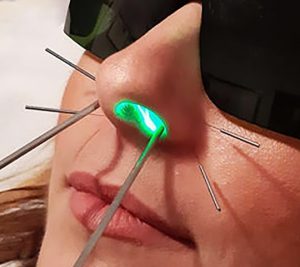
Acu-LLLT acupuncture is the application of therapeutic LLLT (Low Level Laser Light Therapy) whilst using the principles of acupuncture.
It is a painless treatment, without side effects and most suitable for children.
Fibre optics create an equivalent needle-effect that allows the excitation of up to 10 acupuncture points, due to its optical power density, and the energy of the laser light trigger the acupoint as a a needle would in traditional acupuncture therapy.
Acu-LLLT acupuncture emits specific laser light which directly affects specific receptors in the cell and stimulates the so-called cellular metabolism. This reduces inflammation, swelling and oedema of the nasal chambers in conditions such as allergic rhinitis, vasomotor rhinitis or other forms of nasal congestion and runny nose.
Acu-LLLT acupuncture can be used as a single method or in combination with medical acupuncture to further enhance the therapeutic effect.
Acupuncture has been considered an effective method for treating gastrointestinal function diseases for thousands of years. In fact, acupuncture has gained progressive acceptance from both practitioners and patients worldwide.
Research has shown that Acupuncture may help in the treatment of Gastrointestinal tract disorders, by:
- inhibiting gastric and duodenal motility by activating sympathetic nerves via spinal reflexes, and increasing motility via the vagus nerve and supraspinal reflexes (Chang 2001; Takahashi 2006; Sehn 2006; Yao 2006; Noguchi 2008);
- altering acid secretion, and visceral pain (Takahashi 2006)

Acupuncture Regulates Gastrointestinal Function
- improving delayed gastric emptying (Xu 2006)
- reducing inflammation, by promoting release of vascular and immunomodulatory factors (Zijlstra 2003)
- stimulating areas in the brain that are involved in gastric perception (Zeng 2009)
- inhibiting stress-induced pro-opiomelanocortin expression in the hypothalamus (Sun 2008
- decreasing permeability of intestinal mucosa in patients with acute pancreatitis, and reducing accumulation of endogenous inflammatory mediators and vascular active substance in intestinal mucosa (Wang 2007).
References
- Tillisch K. Complementary and alternative medicine for functional gastrointestinal disorders. Gut. 2006 May;55(5):593-6.
- Shen YH, Nahas R. Complementary and alternative medicine for treatment of irritable bowel syndrome. Can Fam Physician. 2009 Feb;55(2):143-8.
- Li H, He T, Xu Q, Li Z, Liu Y, Li F, Yang BF, Liu CZ. Acupuncture and regulation of gastrointestinal function. World J Gastroenterol. 2015 Jul 21;21(27):8304-13.
- Takahashi T. Acupuncture for functional gastrointestinal disorders. J Gastroenterol. 2006 May;41(5):408-17.
Acne is one of the most common skin problems, affecting almost all adolescents to some degree, that can also continue into adulthood. These outbreaks can be triggered by hormonal disorders, increased stress, poor diet, use of inappropriate cosmetics, poor hygiene and alcohol consumption.
The severity can vary widely, but no matter how severe it is, acne can have a significant impact on social and emotional health. Consequently, it can also be a source of physical pain and local skin infections.

Acne Managed effectively with Acupuncture.
Acne in Traditional Chinese Medicine
Specifically, in acne “an increase in heat and humidity in the body is considered responsible, which affect and are affected by the function of the lungs, stomach and spleen”.
The result of this disharmony in the body is expressed by acne on different areas of the skin. Acupuncture leads to the secretion of substances that have anti-inflammatory, analgesic, endocrine and neurotransmitter effects, thus affecting and harmonizing functions of the various systems of the human body.
In general, acupuncture treatment in each patient is unique. The treatment is adapted to the needs of each individual, therefore, depending on each case, treatment may include acupuncture alone or a combination of herbs or essential oils with acupuncture. The frequency with which acupuncture is performed is initially 2 to 3 times a week and then less frequently, on a weekly basis, for about 2 to 3 months.
Benefits acupuncture offer for acne:
- Reduces inflammation
- Maintains normal number and functionality of the cells of the immune system.
- Increases microcirculation locally and reduces swelling.
References
- Mansu SSY, Liang H, Parker S, Coyle ME, Wang K, Zhang AL, Guo X, Lu C, Xue CCL. Acupuncture for Acne Vulgaris: A Systematic Review and Meta-Analysis. Evid Based Complement Alternat Med. 2018 Mar 12;2018:4806734.
- Chun-Yan C, Guang-Yao X, Yan-Yan S, Ming-Shu X, Peng L. Acupuncture: A therapeutic approach against acne. J Cosmet Dermatol. 2021 Dec;20(12):3829-3838.
Tendonitis is a common injury that occurs on tendons, typically due to repetitive action. The tendon is a thick cord-like structure that attaches bones to muscles. When a repetitive action strains the tendon, it becomes inflamed and irritated, causing pain and discomfort. Furthermore, other causes for tendonitis include arthritis, gout, and adverse reactions to certain types of medicine.
Tendonitis isn’t just work or exercise-related, as tendons tend to lose elasticity with age and furthermore, the inflammation can even cause an infection within the tendon sheath. What’s more, the shoulders, heels, elbows, and wrists are mostly affected by tendonitis.
Tendonitis and Acupuncture
Acupuncture has been hailed as an incredibly useful treatment for tendonitis since 1990 as studies in The Clinical Journal of Pain came to light.The studies revealed that participants who suffered from shoulder tendinitis had their pain reduced considerably, as well as be able to return to daily activities, move their shoulder, and regain strength after a single acupuncture treatment.
Tendonitis pain and Acuncture Therapy
Acupuncture alleviates the symptoms, through several mechanisms.
- It stimulates the nervous system to release chemical compounds like endorphins in the brain, spinal cord, and muscles. Hence, these chemicals alter the perception of pain and promote a sense of well-being.
- Acupuncture has anti-inflammatory effects. Therefore, it triggers the release of vascular and immunomodulatory factors, which aid in the reduction of swelling and inflammation around the affected tendon.
- It enhances blood circulation to the area around the inserted needles, thus, promoting healing and recovery by supplying more oxygen and nutrients to the inflamed tissues.
Acupuncture needles are inserted in acupoints on the meridians of the body, thus, alleviating pain and restoring circulation to the area. Finally, healing occurs and the swelling disappears. When needles are placed at the point of the injury, correcting the disharmony in the body, the flow improve, therefore restores the imbalance and heals.
References
- Neal BS, Longbottom J. Is there a role for acupuncture in the treatment of tendinopathy? Acupunct Med. 2012 Dec;30(4):346-9.
- Zhou Y, Chen C, Yang Y, Yu H, Yang Z. Acupuncture therapy for tennis elbow: A protocol for systematic review and meta-analysis. Medicine (Baltimore). 2021 Feb 5;100(5):e24402.
- Hennessy MS, Molloy AP, Sturdee SW. Noninsertional Achilles tendinopathy. Foot Ankle Clin. 2007 Dec;12(4):617-41, vi-vii.
- Lin W, Liu CY, Tang CL, Hsu CH. Acupuncture and small needle scalpel therapy in the treatment of calcifying tendonitis of the gluteus medius: a case report. Acupunct Med. 2012 Jun;30(2):142-3.
Acupuncture at Satory Medical Centre improves the odds of having a baby with IVF!
Satory Medical Centre has a Fertility enhancement Acupuncture-program which intensifies the body’s natural potential for a healthy pregnancy, including IVF protocols. Thus, the body’s ability to conceive and have a healthy baby will increase. The Acupuncture-program will also revitalize the body’s overall health and well-being, evidently, making the whole process even more pleasant.
Some of the side benefits of these Fertility enhancement treatments are:
- improved sleep,
- immunity, and
- energy.
These sessions further create a calmer disposition through the release of emotional stress, and allow for an overall improvement of the body’s digestion and ability to renew itself.
Research demonstrates that IVF -acupuncture treatments before and after intra-uterine and embryo transfer may significantly improve pregnancy rates by:
- increasing blood flow to the uterus,
- regulating hormone levels,
- reducing stress, and

Specialized Acupuncture Protocol for IVF
- improving male sperm counts.
Additionally, acupuncture is very useful throughout infertility treatment and pregnancy. It is very beneficial to treat other fertility conditions as well. These include:
- hormone-related emotional imbalances,
- pelvic pain,
- menopausal symptoms,
- heavy bleeding,
- irregular periods, and
- postpartum disorders.
Acupuncture also enhances overall fertility health, as it:
- normalizes menstrual cycle and hormone levels
- increases blood flow to the uterus and ovaries, furthermore, it improves the quality of eggs and heightens chances of a successful implantation
- returns ovulation if it stopped due to Polycystic Ovarian Syndrome (PCOS)
- increases likelihood of a successful birth by supporting your body’s overall health.
References
- Wang X, Lin H, Chen M, Wang J, Jin Y. Effect of acupuncture on in vitro fertilization: An updated systematic review and data mining protocol. Medicine (Baltimore). 2018;97(24).
- Zou Z, Zheng Q, Wen X, Yang Z, Hou T, Hao X, Zhou S, Li Y. Pregnancy outcomes and the dose-related effects of acupuncture therapies in women undergoing in vitro fertilization: A protocol for systematic review and meta-analysis. Medicine (Baltimore). 2020 Aug 28;99(35).
- Stener-Victorin et al. 1996; EA and uterine blood flow impedance.
- Stener – Victorin et al , Human Reprod 1999, 2003, 2005.
- Siterman, Archives of Andrology, 39:155-161,1997.
- Quintero et al. A randomized, controlled, double-blind, crossover study evaluating acupuncture as an adjunct to IVF. Fertil Steril 2004;81 (supp 3):11-12.
Auricular acupuncture, also known as ear acu-therapy, for stress regulation is an effective method for dealing with chronic stress, test anxiety, overthinking and worry. Ear acu-therapy, therefore, helps the body to function by removing unnecessary stress and excessive anxiety that cause chronic fatigue, both physical and psychological
Anxiety is one of the most widespread psychological disorders of our time. It is a physical and mental reaction to a threat or may also be a preparation of the body to deal with demanding situations. Stress is a condition that all people experience and to some extent, can act as motivation.
Effects of Excessive Stress and Anxiety:
- Fatigue and dizziness
- Headache
- Stomach problems
- Hyperhidrosis
- Gastrointestinal disorders
- Sexual dysfunction
- Acidity
- Increase in pressure
- Musculoskeletal problems
- Tachypnea
- Panic attacks
- Sleep disorders
- Disorder of the menstrual cycle
- Depression
Auricular Acupuncture for anxiety

Auricular acupuncture
Ear acupuncture is a therapeutic technique applied to the pinna of the ear and can be used to treat many disorders and health issues, including stress. Furthermore, it is well known that there are special points on the ear that affect the psyche, stress, mood and concentration.
Acupuncture of the ear affects both the central and autonomic nervous systems, thus, achieving significant benefits in the case of stress and anxiety. It balances the sympathetic – parasympathetic nervous system and prevents and treats all the symptoms of anxiety.
There are many scientific studies that prove the effectiveness of auricular acupuncture to regulate stress. Acupuncture and ear acu-therapy are internationally recognized methods with great validity and reliability. They deal with anxiety disorders with great efficiency and are: natural, individualized, painless, well tolerated, without any side effects when performed by a doctor specialized in the method
References
- Wang, Shu-Ming,, Kain, Zeev N. Auricular Acupuncture: A Potential Treatment for Anxiety, Anesthesia & Analgesia: February 2001 – Vol. 92 – Issue 2 – p 548-553.
- Catharina Klausenitz,et al. Auricular Acupuncture for Exam Anxiety in Medical Students—A Randomized Crossover Investigation. PLoS One. 2016; 11(12): e0168338.
- de Lorent L1, Agorastos A2, Yassouridis A3, Kellner M2, Muhtz C4. Auricular Acupuncture Versus Progressive Muscle Relaxation in Patients with Anxiety Disorders or Major Depressive Disorder: A Prospective Parallel Group Clinical Trial. J Acupunct Meridian Stud. 2016 Aug;9(4):191-9.
- Stefan H, Kreiselmeyer G, Kerling F, et al. Transcutaneous vagus nerve stimulation (t-VNS) in pharmacoresistant epilepsies: a proof of concept trial. 2012;53(7):115–118.
Chronic neck pain is a challenging condition to treat in clinical practice and has a considerable impact on quality of life and disability.Chronic neck pain can be caused by dysfunction of various structures in the neck, and it can manifest as episodic pain and/or stiffness. Neck pain can also radiate from areas close to the neck, such as the shoulder, jaw, head and arm.
What causes neck pain?
Common causes of neck pain are usually due to daily activities such as:
- sitting in front of a computer for hours
- poor posture
- uncomfortable sleeping position or
- trauma during exercise
Accidents or falls can also cause serious neck injuries, such as vertebral fractures, vascular injuries and even paralysis.

Acupuncture for Neck Pain.
How Acupuncture works in the treatment of neck pain:
Acupuncture is strongly recommended for musculoskeletal diseases and pain, including neck pain. Acupuncture alleviates pain in a multifaceted way:
- Causes the release of endorphins, both locally, at the site of pain, and remotely into the central nervous system
- Disables trigger points
- Inhibits pain stimulus transmission through the spinal cord
- Activates the endogenous analgesic system in the hypothalamus.
Acupuncture therapy is the best choice for the treatment of both chronic and acute pain, as it effectively to the reduces pain, inflammation and stiffness.
References
- Berger AA, Liu Y, Mosel L, Champagne KA, Ruoff MT, Cornett EM, Kaye AD, Imani F, Shakeri A, Varrassi G, Viswanath O, Urits I. Efficacy of Dry Needling and Acupuncture in the Treatment of Neck Pain. Anesth Pain Med. 2021 Apr 3;11(2):e113627.
- Seo SY, Lee KB, Shin JS, Lee J, Kim MR, Ha IH, Ko Y, Lee YJ. Effectiveness of Acupuncture and Electroacupuncture for Chronic Neck Pain: A Systematic Review and Meta-Analysis. Am J Chin Med. 2017;45(8):1573-1595.
Chronic neck pain is a challenging condition to treat in clinical practice and has a considerable impact on quality of life and disability. Neck pain usually centers on one location on the neck, but it can also be dispersed. This kind of pain can take the form of stiffness or spasms.
References
Sun, M., Geng, G., Chen, J., Ma, X., Yan, M., Liu, X., Du, J., Cai, D., Zheng, H., Zhao, L., & Liang, F. R. (2019). Acupuncture for chronic neck pain with sensitive points: study protocol for a multicentre randomised controlled trial. BMJ open, 9(7).
Yang Y, Yan X, Deng H, Zeng D, Huang J, Fu W, Xu N, Liu J. The efficacy of traditional acupuncture on patients with chronic neck pain: study protocol of a randomized controlled trial. Trials. 2017 Jul 10;18(1):312.